

CANOPY-DIRECT™ TECHNOLOGY
ENGINEERING THE AIR AROUND THE CROP.
FROM ROOM CONTROL TO CANOPY CONTROL.
Conventional air distribution typically conditions the room and relies on mixing before conditioned air reaches the crop. Canopy-Direct™ takes a different approach by creating a more direct relationship between the CH&D system and the crop canopy.
The engineering objective is not simply to create a room that meets average temperature and humidity targets. The objective is to better understand, deliver and manage the air conditions where the plant actually exchanges heat and moisture.
HOW CANOPY-DIRECT™ WORKS
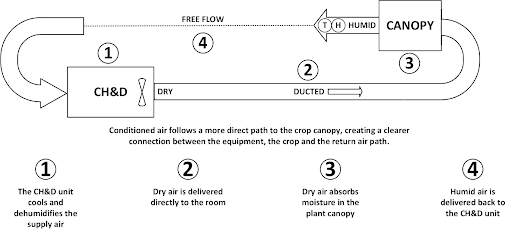
Conventional room-mixed HVAC systems dilute conditioned air before it reaches the crop canopy, increasing airflow requirements and equipment capacity. Canopy-Direct™ delivers conditioned air directly to the canopy, improving efficiency and providing more precise climate control.
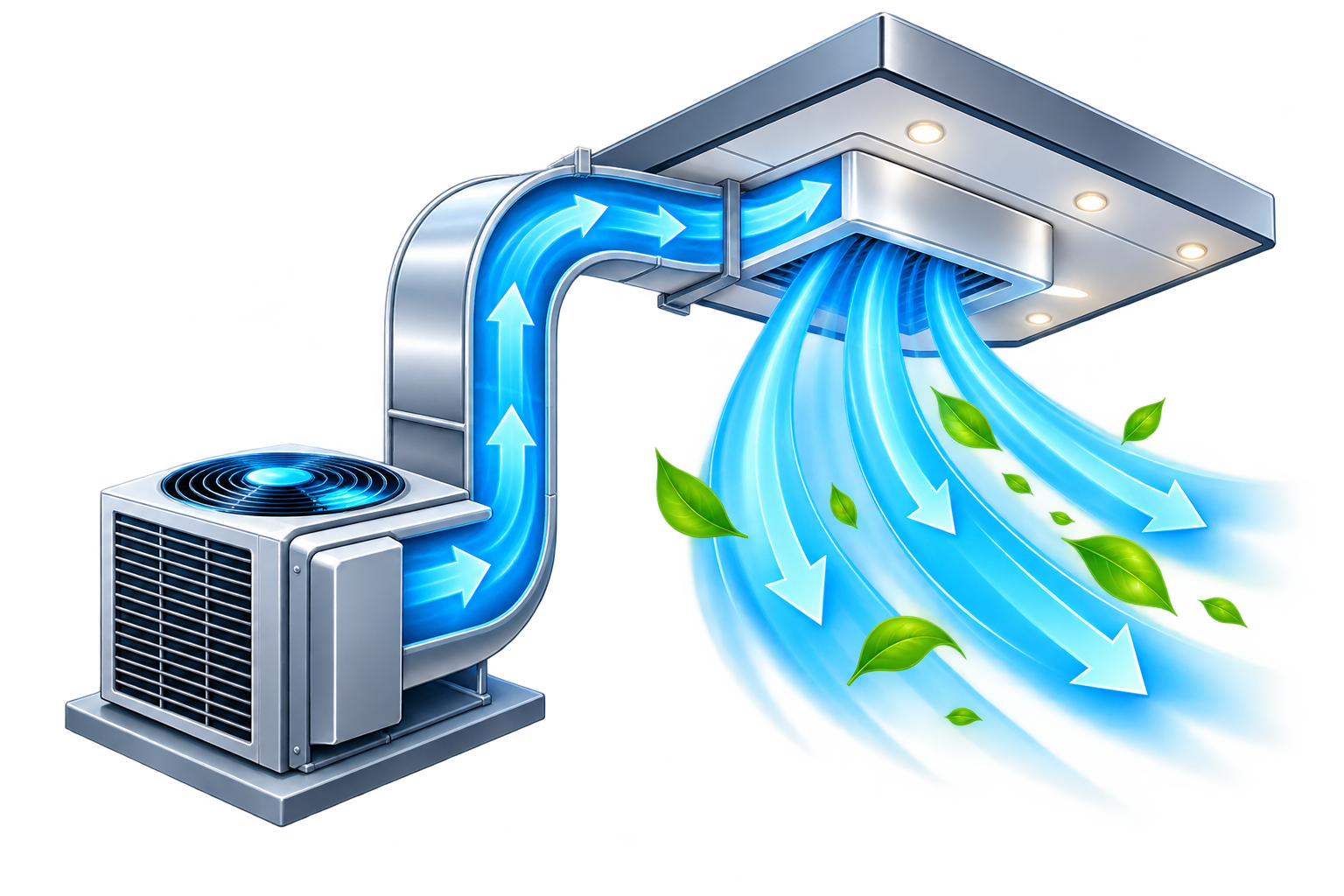
Condition Air
The CH&D unit cools and dehumidifies the supply air to the required conditions.
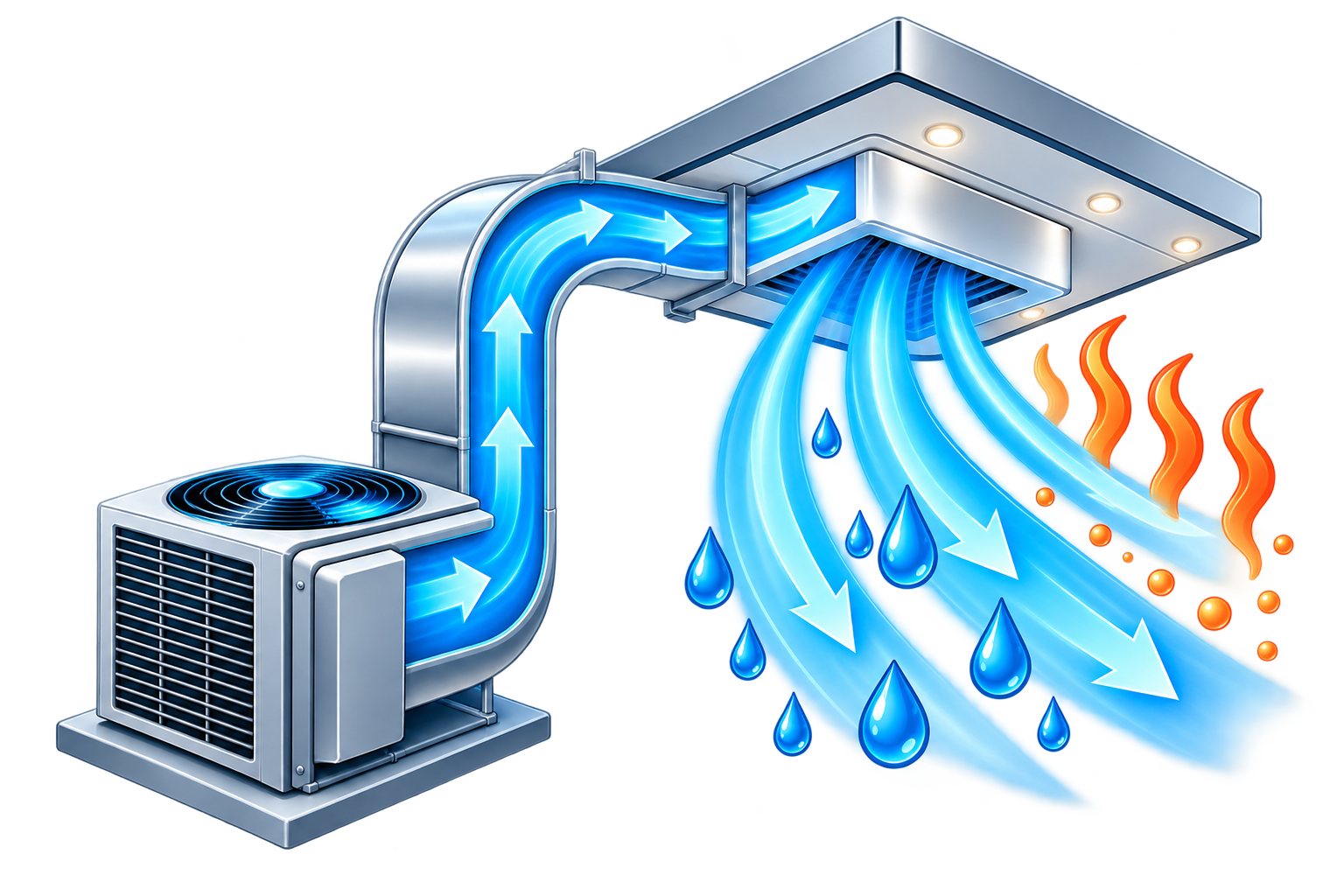
Deliver Air to Canopy
Conditioned air is delivered directly to the crop canopy instead of mixing throughout the room.
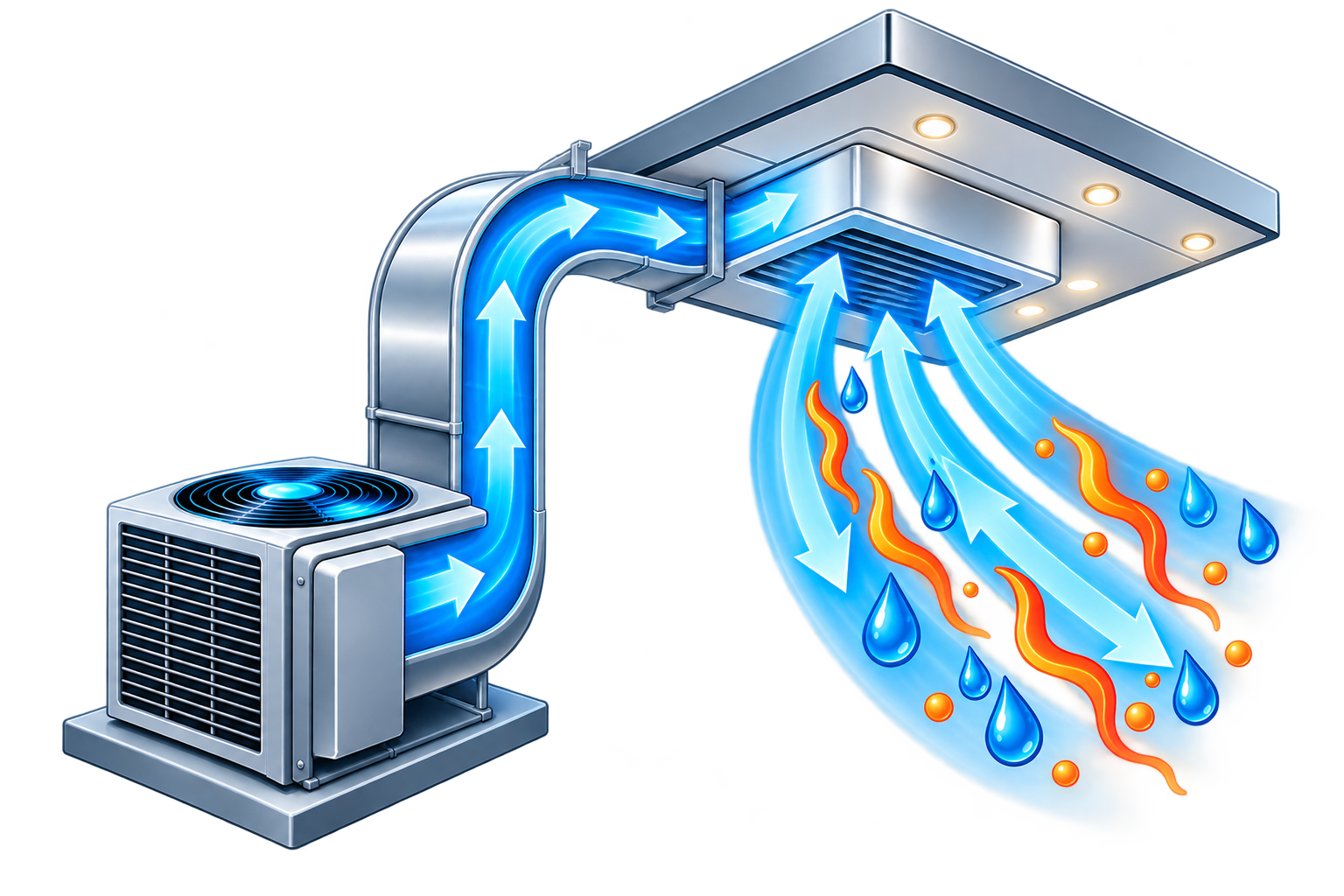
Remove Heat & Moisture
Air absorbs plant heat and moisture directly at the canopy for precise climate control.
Return to CH&D
Canopy-leaving air returns directly to the CH&D unit for continuous optimisation.
SCIENTIFIC PRINCIPLES
THE SCIENCE HAPPENS AT THE CANOPY.
Canopy-Direct™ is based on the principle that the most important environmental interactions occur around and within the crop canopy—not simply at a room-average sensor location.
Plant Transpiration
Plants continuously exchange water vapor with the surrounding air. The movement of air around the canopy influences how heat and moisture are removed from the crop environment.
Vapor Pressure & VPD
Vapor pressure and vapor pressure deficit help describe the moisture-driving conditions experienced by the crop. Canopy conditions are therefore important when evaluating the plant environment.
Boundary Layers
Air movement around leaf surfaces affects the boundary layer surrounding the plant. Airflow is therefore part of the physical relationship between the plant and its environment.
Canopy Microclimates
Temperature, humidity, air velocity and vapor pressure can vary within a growing space. Room-average conditions may not fully describe the environment experienced at the canopy.
PATENT INFORMATION
TECHNOLOGY DESIGNED FOR A NEW APPROACH.
Canopy-Direct™ represents a technology and engineering approach developed around a more direct relationship between climate-control equipment, air distribution and the crop canopy.
The website can provide an overview of applicable intellectual property, patent status and technology development as information becomes available for public release.
Patent & Intellectual Property Information
Detailed patent information, including patent numbers, jurisdictions, status and applicable claims, should be published here using the official information supplied by Canopy Air Technologies.
BENEFITS
DESIGNED FOR A MORE DIRECT ENGINEERING RELATIONSHIP.
Canopy-Direct™ is intended to create a clearer connection between air distribution, canopy conditions and the climate control process.
DIRECT AIR PATH
Reduce the distance and dilution between conditioned supply air and the crop canopy.
CANOPY-FOCUSED CONTROL
Use canopy conditions as a more direct reference for environmental control.
ENGINEERING EFFICIENCY
The analyzed example demonstrates potential reductions in calculated HVAC capacity and airflow.
Our FAQs
Frequently Asked Questions
Canopy-Direct™ delivers conditioned air directly to the crop canopy instead of allowing it to mix throughout the room, providing a more direct and measurable airflow path.
Plant performance is governed by canopy temperature, humidity, vapor pressure, VPD, and airflow—not room-average conditions.
Many facilities can evaluate retrofit opportunities through engineering analysis and airflow optimization.
Vertical farming, indoor agriculture, cannabis cultivation, hydroponics, research facilities, and Controlled Environment Agriculture.
Many existing cultivation facilities can benefit from engineering evaluations to determine whether airflow improvements or retrofit opportunities are feasible.
No. It is an air distribution methodology that works with properly engineered HVAC systems to improve how conditioned air is delivered and controlled.
Performance depends on facility layout, crop type, environmental requirements, and system design. Engineering analysis is recommended for each project.
No. The methodology can be applied to a range of Controlled Environment Agriculture facilities, including indoor farms, greenhouses, hydroponic systems, and research environments.
Learn More About Canopy-Direct™
Explore the engineering principles, psychrometric analysis, and performance comparisons presented in the Canopy-Direct™ white paper.